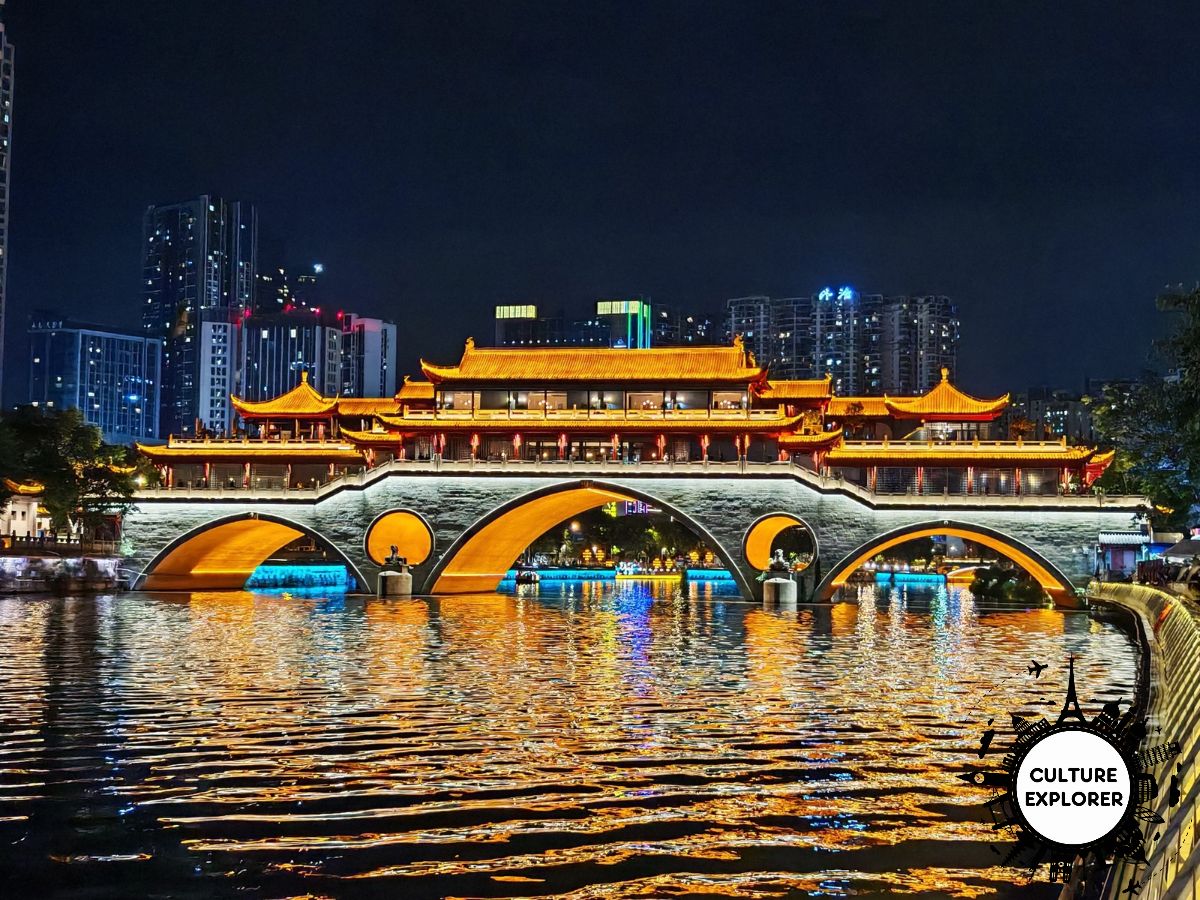
How to get to Chengdu: Your trip planning guide
Culture Explorer uses affiliate links, including those from Amazon, which are identified using an *. If you buy something through the link at no extra cost to you, Culture Explorer may be paid a commission, which helps to fund running of the site. You can read more about this here.
I was born in Chengdu and lived there until I was nine so the city has a very special place in my heart.
On my return visits over the last 30 years, I’ve seen the city blossom from a provincial capital of just under 4 million residents to a metropolis that’s home to over 21 million people.
Happily, it’s also now a firm favourite on China travel itineraries, both for first time visitors and returning guests.
That means increased availability of flights and often at very competitive rates.
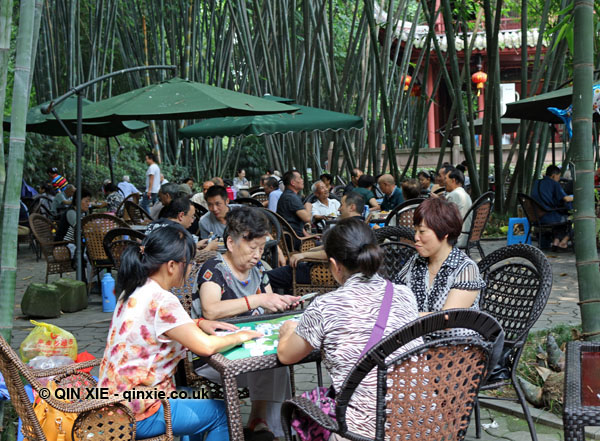
They come for the pandas and spicy food, and discover the traditional teahouses and neighbourhoods that juxtapose the historic and modern.
And they always want to come back – because this is a laid back city that’s designed to be lived in.
If it’s your first visit to Chengdu, this trip planning guide will help you get started.
Best time to visit Chengdu
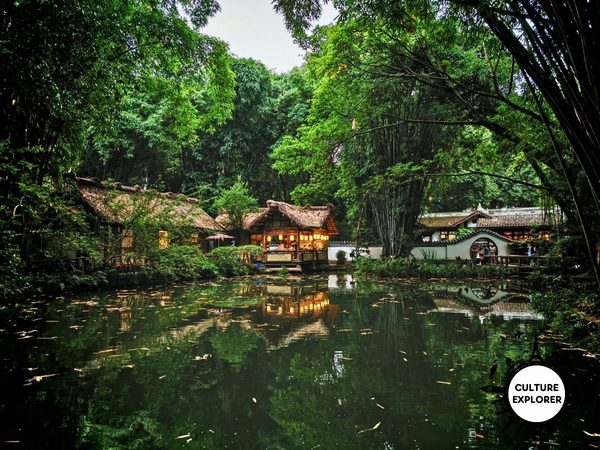
Chengdu is a year-round destination but you’ll find the best weather for sightseeing around the shoulder seasons of spring and autumn.
That means April to early June and September to early November.
In winter it can feel cold and damp and a lot of places won’t have heating.
And in summer, it can be blisteringly hot, with heavy rain and sometimes flooding triggered by the monsoon season further south in China.
This is especially important to bear in mind if you’re planning to visit destinations around Chengdu, like Leshan for the Unesco-listed Giant Buddha, Mount Qingcheng for hiking, or the Tibetan Plateau for Jiuzhai Valley National Park.
Dates to avoid
Whatever you do, avoid the major public holidays in China. These are:
- New Year’s Day – 1 January
- Chinese New Year – can be January or February
- Qingming Festival – usually early April
- Labour Day – 1 May
- Duanwu Festival (Dragon Boat Festival) – usually mid-June
- Mid-Autumn Festival – usually mid-September
- National Day – 1 October
There will be a lot of domestic travel during this time, which means bigger crowds and longer queues.
Tickets for trains will also often sell out.
How to get to Chengdu
By plane
Chengdu has two international airports.
Chengdu Tianfu International Airport (TFU) is newer and much further out, and it handles most of the long haul flights.
Chengdu Shuangliu International Airport (CTU) is closer to the city and handles mainly domestic and regional flights.
Both airports are connected to the city via the super efficient Metro system, and you can pay for your ticket using the Alipay app.
By train
If you’re coming into Chengdu via train from another part of China, you’ll most likely stop at Chengdu East Railway Station as this is the one that handles high speed trains.
Slower, inter-city trains will use Chengdu North Railway Station and Chengdu South Railway Station.
Chengdu West Railway Station only handles local trains so you’d only go there for rail connections to satellite cities like Dujiangyan.
There are also a couple of smaller stations around the city so if you’re visiting Chengdu by train, make sure you double check which station you’re arriving into and departing from.
By other means
Long distance buses are available and connect nearby cities and provinces to Chengdu.
Realistically, unless you’re on an extremely tight budget, or want to go off the beaten track and have lots of time, you’re going to fly or get the train to Chengdu.
What the bus network can be good for is visiting some of the rural villages around Chengdu but the language barrier means you might find it easier to hire a driver or pre-book a taxi.
Where to stay in Chengdu
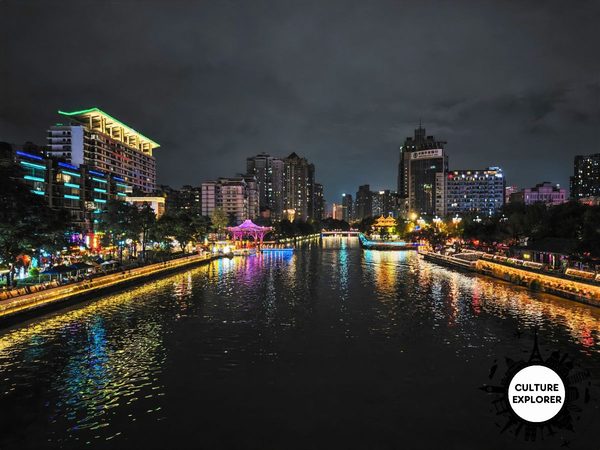
Chengdu is a sprawling city and even though the Metro system is very efficient, it can easily take you an hour or two to get across the city.
The Metro system also doesn’t run super late into the night so you might find it hard to get back to your accommodation if you’re staying further out.
In the past, I’ve had instances where taxi drivers refused to take me because it’s too out of the way for them and they might not be able to secure a return fare.
So if you want to maximise your time for sightseeing and ensure you can always get back at night, I would recommend you stay centrally and within the third ring road.
In general, anywhere on Metro lines 1, 2 and 4 is a good bet as they cover most of the main tourist areas.
Best neighbourhoods in Chengdu
If you’re looking for specific neighbourhoods to narrow your search, Jinjiang district and Qingyang district are the two areas that cover central Chengdu.
My top pick would be Jinjiang district as it’s busier and there are more things to do in terms of restaurants, bars and shops.
The hub of the action is around Chunxi Road, a century-old shopping street, and the Taikoo Li complex, which is a high end, open-air shopping complex.
Qingyang district is largely residential, although it’s where you’ll find Tianfu Square, the centre from which Chengdu radiates outwards.
Another option to consider is Century City.
It’s a relatively new development to the south of the city centre and is a bit more out of the way but it has its own collection of modern attractions, including the New Century Global Center (the world’s largest building) and the subterranean shopping centre SKP Chengdu.
Best hotels in Chengdu
The favourable exchange rate means hotels in Chengdu tend to feel very affordable, with average nightly rates at an international hotel chain coming in at around £40 to £70 a night.
Budget hotels (not hostels) are around £20 a night while luxury hotels start from around £80 a night and rarely go over £150 a night.
One thing to note: double check where the hotel is located.
As Google is blocked in China, and its map hasn’t been updated, hotels, restaurants and other attractions will often appear in the wrong place on Western bookings websites.
Chinese-owned Trip.com* is a good place to look, even if you end up booking on a different site.
Budget: POSHPACKER Chengdu Flipflop Hostel
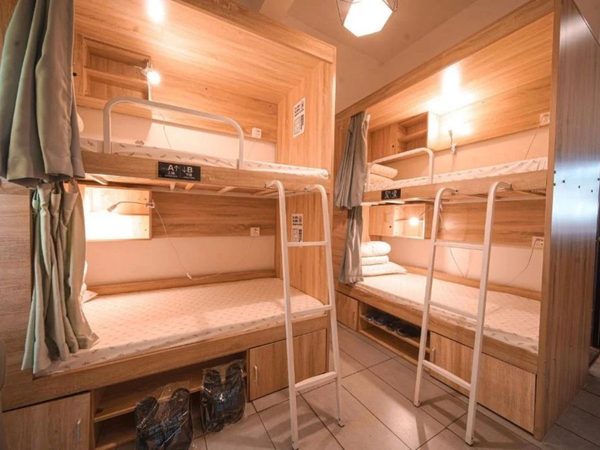
If you’re on a budget, POSHPACKER has a few hostels around Chengdu.
The most centrally located is the POSHPACKER Chengdu Flipflop Hostel, which sits within walking distance of Chunxi Road and Taikoo Li, where you’ll also find the nearest Metro station.
Its private rooms are not much more expensive than the dorm rooms so they’re certainly worth considering.
Price: From £7 a night, bunk bed in a dorm room
Address: No.98, Dongsheng Street, Jinjiang, 610021 Chengdu, China
Book your stay on Booking.com or Trip.com*.
Mid-range: Dorsett Chengdu
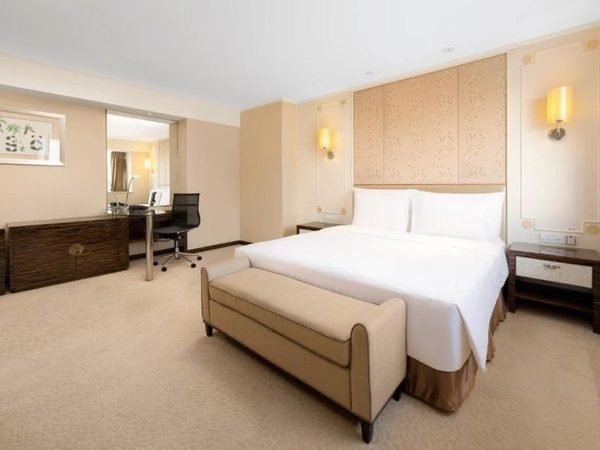
Centrally-located Dorsett Chengdu is set slightly away from the city’s main attractions – we’re talking 20 minutes’ walk instead of 10 – but with Metro lines 1 and 4 on its doorstep, it’s still super easy to get around.
Interiors-wise it’s a bit boring and businessy, but that reflects the business centres around it.
And you don’t have to wander far to find good restaurants, including a branch of Chen’s mapo tofu.
Price: From £37 a night, room-only double
Address: No.168, West Yulong Street, Qingyang, 610015 Chengdu, China
Book your stay on Booking.com* or Trip.com*.
Luxury: Upper House Chengdu
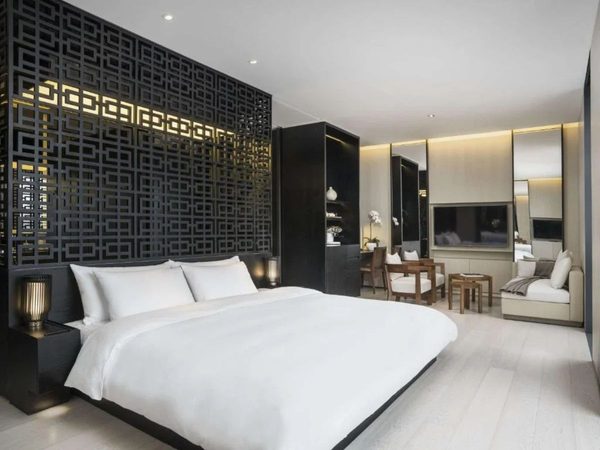
Until 2025, Upper House Chengdu was known as The Temple House in a nod to the historic Daci Temple that’s just around the corner.
The public spaces of the hotel, including the Michelin-starred restaurant, spa, and reception area, incorporate a handful of century-old courtyard houses but the rooms are entirely modern.
It’s built by the same developers as Taikoo Li so it’s very much integrated into the shopping complex.
Price: From £286 a night, room-only studio
Address: No.81 Bitieshi Street, Jinjiang District, Jinjiang, 610021 Chengdu, China
Book your stay on Booking.com* or Trip.com*.
Unique: Buddha Zen Hotel
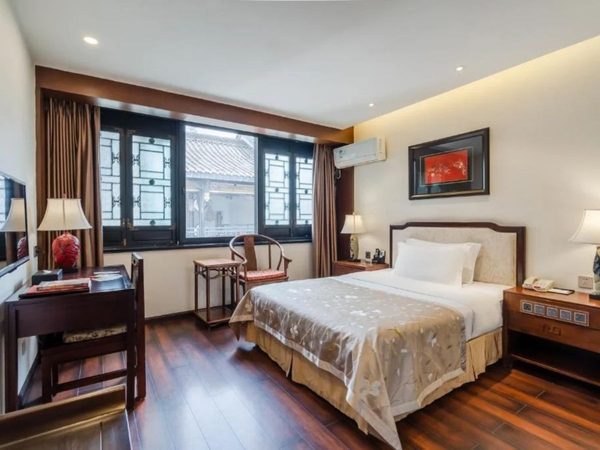
Located close to the Buddhist Wenshu Monastery, this hotel has been around for a couple of decades.
It takes its design inspiration from the monastery, and incorporates a quiet courtyard in the heart of the hotel.
This is quite a touristy area so you’ll find lots of restaurants close by.
Price: From £40 a night, B&B double
Address: No. B6-6, Wenshufang Street, Qingyang, 614000 Chengdu, China
Check availability on Booking.com* and Trip.com*.
How to get around Chengdu
It’s really easy to get around Chengdu by public transport.
The Metro system connects all of the main attractions you’d want to get to, and you can pay for it using a QR code generated through Alipay or by buying a ticket at one of the machines.
All the main stops are announced in English, which can be helpful.
There are security checks at all of the stations so you’ll need to have your bag and any water bottles scanned.
You also can’t take any aerosols on the Metro so that’s worth bearing in mind.
Local buses are cheaper but a bit more tricky to navigate if you don’t speak Chinese as none of the announcements are made in English.
There are a handful of air conditioned express buses created specifically for tourists that make getting to places like the Panda Base much easier, and they do make announcements in English.
Shorter journeys are ¥2 (20p), while longer ones are up to ¥10 (£1).
Taxis are available but you’ll probably find it easier to use a ride hailing service as then everything is paid for on your phone and you don’t need to worry about the language barrier.
Again, you can book this directly through Alipay.
Just be aware that traffic can be pretty awful and it might be quicker to get the Metro.
Other essentials
Currency
Chengdu uses the yuan, which is also known as the renminbi (RMB). Locally, you might also hear it being referred to as kuai.
There are two payment apps, Alipay and WeChat, that are accepted just about everywhere, even roadside stalls, so you don’t really need to carry cash at all.
That said, it might still be helpful to have some as a back up, just in case your payment app isn’t working.
You’ll need to link a credit or debit card and submit your passport details to use these apps but other than that, you’ll find few places will accept a physical card.
Language
The official language across China is Mandarin Chinese but in Chengdu you’ll hear the local dialect, Sichuanese, just about everywhere.
Most people will speak Mandarin because they’re taught it at school, but sometimes their pronunciation might be off, which can be quite confusing if you’re using a translation app.
Younger people will speak English to varying degrees of proficiency but they will certainly be able to communicate to you via a translation app – yours or theirs.
Wifi and connectivity
Free wifi is offered just about anywhere so look out for publicly displayed passwords.
Many websites and apps are blocked of course, including Google, Facebook, Instagram, and X, but you can still access them freely if you’re roaming on an international sim.
I’ve used Airalo’s sims* without issue but have found that options from Trip.com* are much cheaper.
There are lots of other esims for travel out there that might be worth exploring.
You could also install a VPN for added security.
I use Nord VPN* because I get it free from Revolut* but I have to say that none of the VPNs I’ve ever tried have worked for browsing blocked sites in China.
Additional resources
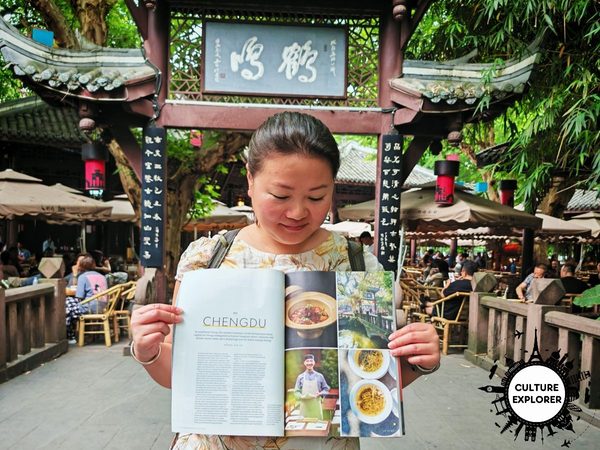
Chengdu doesn’t have a tourist board website I can send you to, but I have written a lot about the city in the past.
So here are a few ways to explore Chengdu:
- For first time visitors: a younger crowd, an older group, and anywhere in between
- For food and tea houses
- For shopping*
- For business travellers*
Pin this for later